



So Here’s the Tea…
Alabama has plenty of opinions about sweet tea. Milo’s now has a billion-dollar figure to contribute to the conversation, along with a business story that reaches from a Birmingham restaurant to grocery refrigerators across the country.
The company’s September sales announcement reports more than $1 billion in annual retail sales, up from $450 million in 2022. Citing Circana data for the 52 weeks ending September 6, Milo’s says it reached the milestone ahead of its projected year-end 2027 target. The figure measures sales at retail, giving a sense of how much tea and lemonade shoppers are taking home.
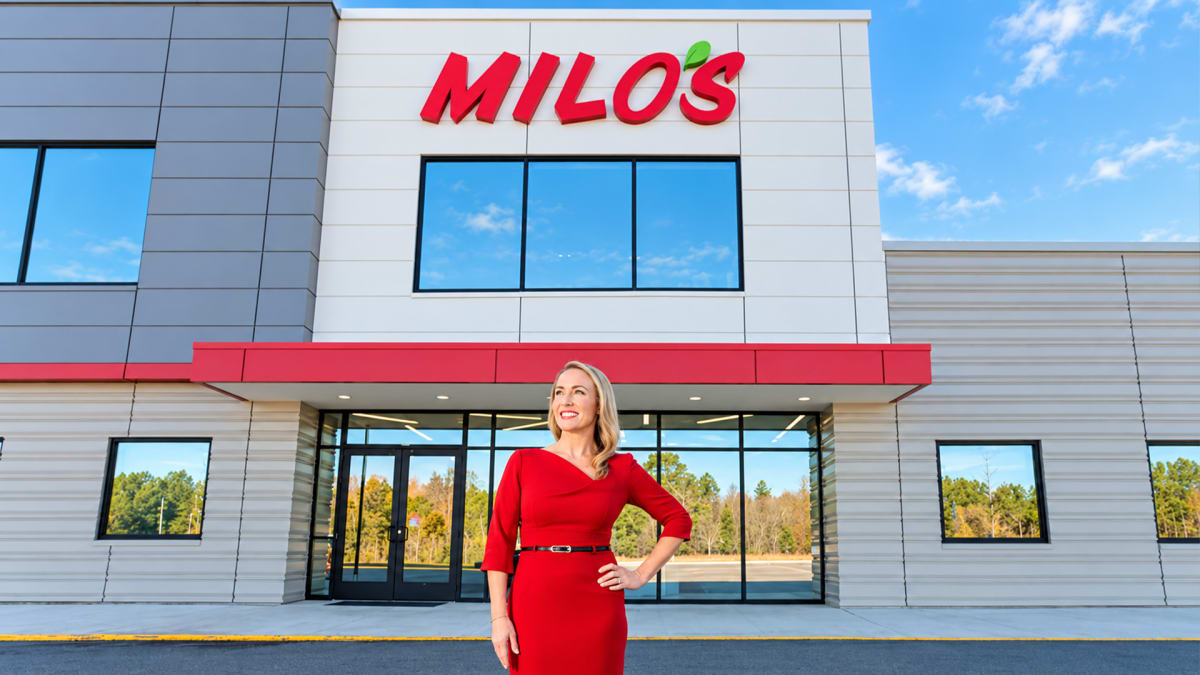
That national reach began with something considerably smaller. Milo and Bea Carlton founded a single Alabama restaurant in 1946. Eighty years later, Milo’s Tea Company remains family-owned, with the founders’ granddaughter, Chair and CEO Tricia Wallwork, leading the business since 2012. Its beverages now reach more than 65,000 stores in all 50 states.
For Alabama readers, the interesting part is what had to happen between a restaurant recipe and that many refrigerator shelves. Since 2020, Milo’s has invested roughly $400 million in U.S. manufacturing, tripled production capacity and added more than 600 jobs across its operations. A familiar gallon of tea requires a substantial operation behind it.
Birmingham and Bessemer remain part of that manufacturing and distribution network, alongside facilities in Tulsa, Oklahoma, and Spartanburg, South Carolina. Those investments connect a product people recognize at the grocery store with the industrial work required to produce and distribute it. The added jobs span the company’s operations; they should not all be counted as Alabama positions.
Milo’s also says it achieved its growth without acquisitions. Its approach has emphasized selling more through existing retail relationships before widening distribution. That sequence matters: getting onto a shelf is one challenge, giving shoppers a reason to return is another. The company has built its core business around the family gallon, a format that makes repeat purchases particularly consequential.
Family ownership has continued through that expansion, while the company’s stated approach to ingredients remains rooted in its founders’ philosophy. Its teas and lemonades are made fresh daily without preservatives or artificial colors.
The result gives Alabama a concrete example of a regional food business scaling through manufacturing investment and broader distribution. Sweet tea may be familiar territory here. Producing it for a national market takes considerably more than a bigger pitcher.
Find more Alabama producers in the Guide to Alabama food manufacturers directory: https://www.guidetoalabama.com/food-manufacturers