



Taking High-Tech Manufacturing Statewide!
The smart factory may sound like something reserved for giant manufacturers with giant budgets. Alabama is testing a different idea: put the technology closer to the smaller companies that could use it most.
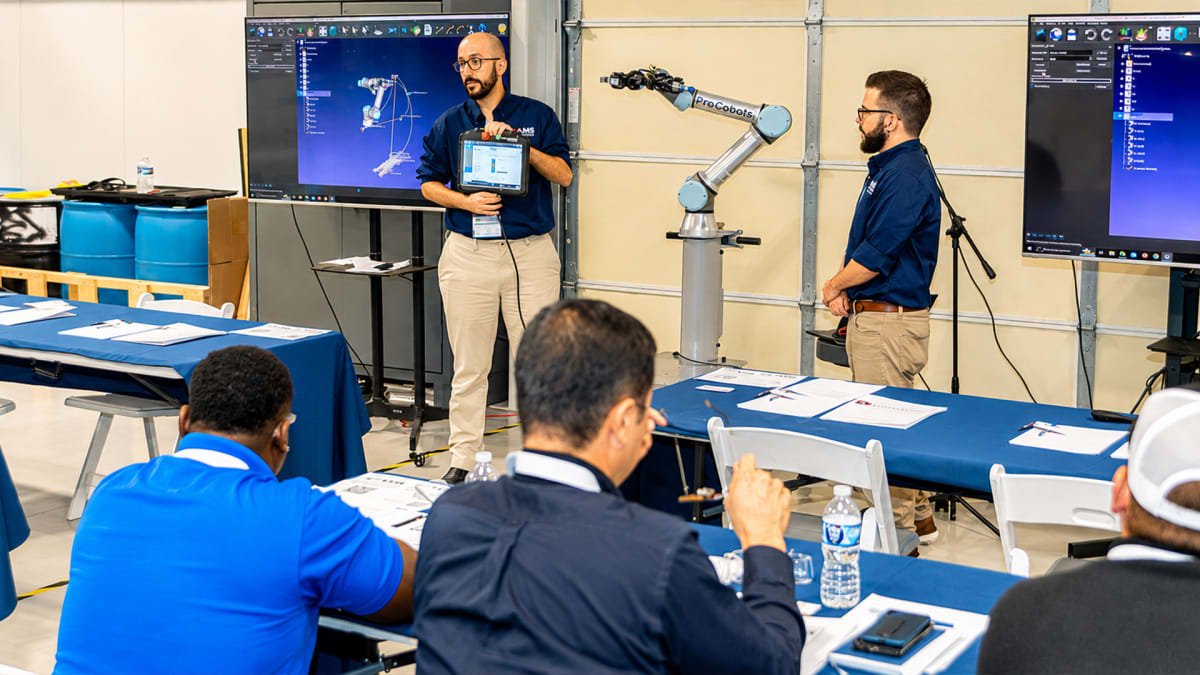
At Auburn University, researchers with the Interdisciplinary Center for Advanced Manufacturing Systems are developing an $8.3 million statewide “satellite ICAMS” model designed to bring advanced manufacturing technology into existing community-college training facilities.
The premise is practical. Instead of asking a manufacturer hours away to send workers to Auburn to see connected machinery or digital production tools in action, the technology could come much closer to home.
Those satellite labs could demonstrate systems such as sensors that detect equipment problems, real-time production dashboards and connected machinery. Data generated at the facilities would also flow back to Auburn, where researchers could use it for machine-learning work and broader manufacturing research.
Closing the Technology Gap
That matters because the biggest hurdle in advanced manufacturing is not always invention. Sometimes it is access.
Large companies can afford to experiment with predictive analytics, automation and digital twins before knowing exactly how those tools will pay off. Smaller and midsize manufacturers often have less room for trial and error, even though many of them form critical links in Alabama’s manufacturing supply chain.
A statewide network could give those companies a chance to see the technology working, train employees on it and decide whether it belongs on their own factory floors.
Alabama already has a strong structure for making that possible. The state’s workforce-training network includes 24 community and technical colleges, creating potential access points well beyond Auburn and the state’s largest industrial centers.
That changes the conversation around the factory of the future. The question becomes less about whether sophisticated technology exists and more about who gets to use it, understand it and build the skills around it.
If the satellite model works as intended, a small manufacturer in one part of Alabama could gain hands-on exposure to technology that previously required a trip, a large capital budget or both.
There is plenty of attention on robots and automation when people talk about manufacturing’s next chapter. Alabama’s experiment is quieter, but potentially just as important: making sure the next chapter is not limited to the companies already big enough to afford it.
The factory of the future may arrive by way of the community college down the road.
For a closer look at the companies and industries producing goods across the state, explore the Guide to Alabama directory at https://www.guidetoalabama.com/manufacturing.