



Tech Talent Starts Here
From hospitals and factories to banks and defense contractors, data is driving decisions across Alabama. The University of Alabama's proposed School of Data Science aims to give the state's future workforce the tools to keep up.
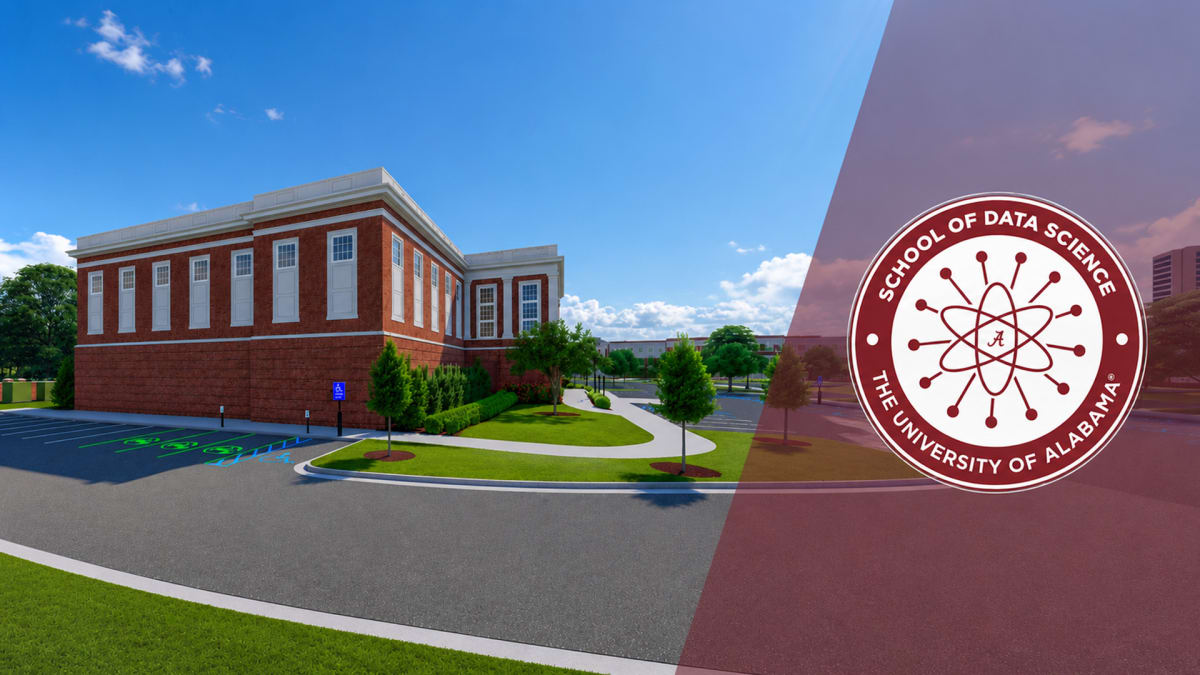
Pending approval from The University of Alabama System Board of Trustees, the University of Alabama plans to launch the state's first School of Data Science in 2027. While the name may sound highly specialized, the goal reaches far beyond future software engineers and computer scientists. The school is designed to connect all of UA’s colleges and schools, bringing data literacy, artificial intelligence, and advanced analytics into disciplines that already shape Alabama's economy.
That's a reflection of how quickly the workplace has changed. Healthcare providers rely on predictive analytics. Manufacturers use automation and machine learning to improve efficiency. Financial institutions process enormous amounts of information every day. Energy companies, cybersecurity firms, and defense contractors are all looking for employees who can understand, interpret, and work with increasingly complex data. The demand isn't limited to tech companies. It's spreading across nearly every sector of the state's economy.
Building Skills for the Jobs Alabama Already Has
One of the school's most ambitious goals is making data education accessible across campus. A business major, nursing student, communications major, or engineering student could all graduate with practical skills in data analysis, machine learning, and responsible AI. As employers continue adopting new technologies, those skills are becoming less of a specialty and more of a workplace expectation.
The school is expected to offer programs ranging from undergraduate degrees to doctoral studies, creating educational pathways that support both new graduates and long-term workforce development. It also aligns with growing conversations happening across Alabama about how to prepare workers for jobs that may look very different a decade from now.
Behind the academic programs sits another major advantage: access to the University of Alabama's High Performance Computing and Data Center. Equipped with powerful GPU clusters, massive data storage capacity, and advanced networking infrastructure, the facility gives researchers and industry partners the computing resources needed for large-scale projects in artificial intelligence, scientific research, and data analytics.
As Southern states compete for technology investment and innovation-driven industries, the University of Alabama is making a long-term bet on talent development. The proposed School of Data Science won't transform Alabama's economy overnight. What it could do is help ensure that more of the jobs, research opportunities, and emerging industries shaped by AI and advanced computing have a reason to grow here.
Explore more ways to expand your education and develop new skills at https://www.guidetoalabama.com/continuing-education-programs.