


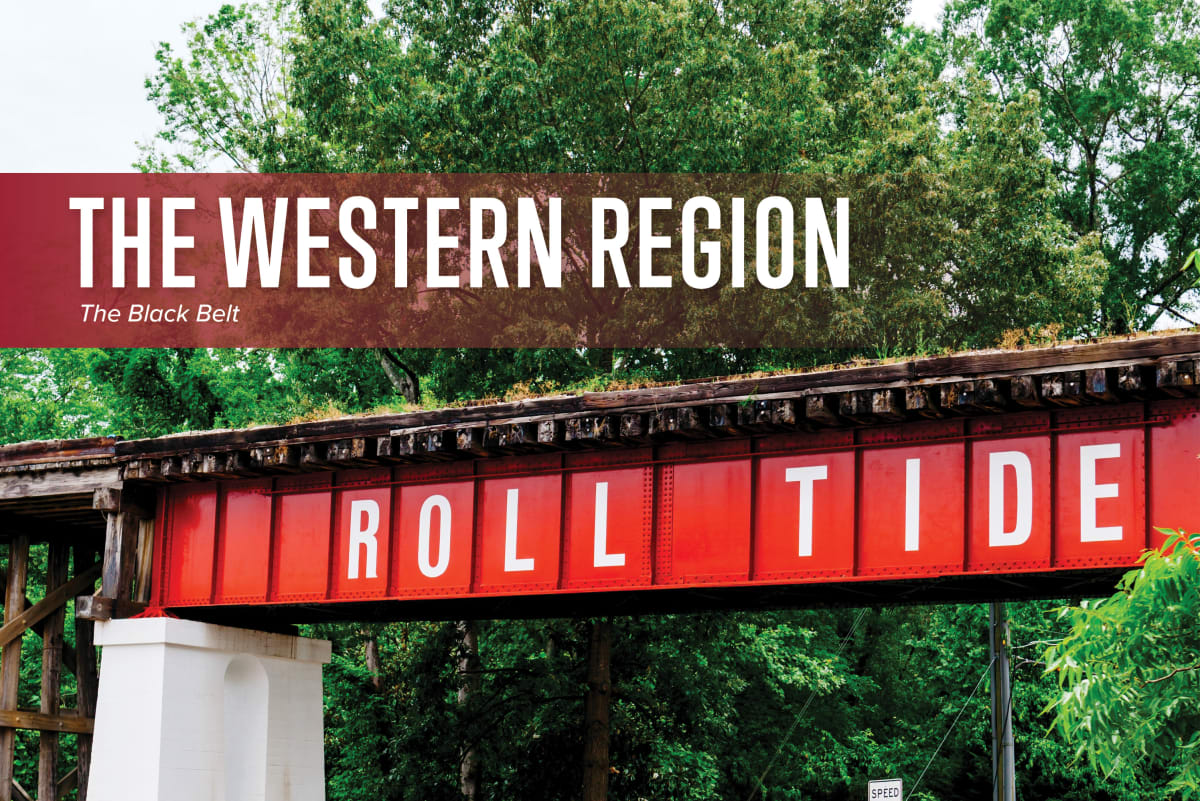
West Alabama & The Black Belt
West of Birmingham, the landscape shifts—fields stretch wider, the soil deepens to a rich, almost black hue. This is West Alabama, home to the Black Belt, named for its fertile land that once made it the heart of Alabama’s cotton empire. But West Alabama is more than farmland—it’s a place where history, industry, and resilience intersect.
In Tuscaloosa, the unmistakable roar of Crimson Tide football shakes the city every fall, drawing fans from across the country. But beyond the stadium, the University of Alabama is an economic powerhouse, generating nearly $3 billion annually for the state. Add to that Mercedes-Benz U.S. International, which has invested over $7 billion into the local economy to start production and employs more than 6,000 workers (not including its impact on over 57k supplier and resource provider jobs), producing luxury SUVs for a global market (MBUSI).
Further west, Selma stands as a living testament to the Civil Rights Movement. But the city isn’t stuck in the past. Community-led efforts, like the Selma Center for Nonviolence, Truth, and Reconciliation, are fueling grassroots revitalization, while historic downtown sees new businesses breathing life into its streets (Selma Center).
In the heart of the Black Belt, food is more than a meal—it’s tradition. Greensboro, the Catfish Capital of Alabama, anchors an industry that helps make Alabama the second-largest producer of farm-raised catfish in the U.S., fueling a $2 billion market. Barbecue joints, soul food kitchens, and the state’s nine Black Belt food trails highlight a culinary heritage where recipes are passed down like family.
History runs deep here, so does change. From the agricultural backbone of the Black Belt to the industrial pulse of Tuscaloosa, West Alabama is a region where tradition and progress move forward together.